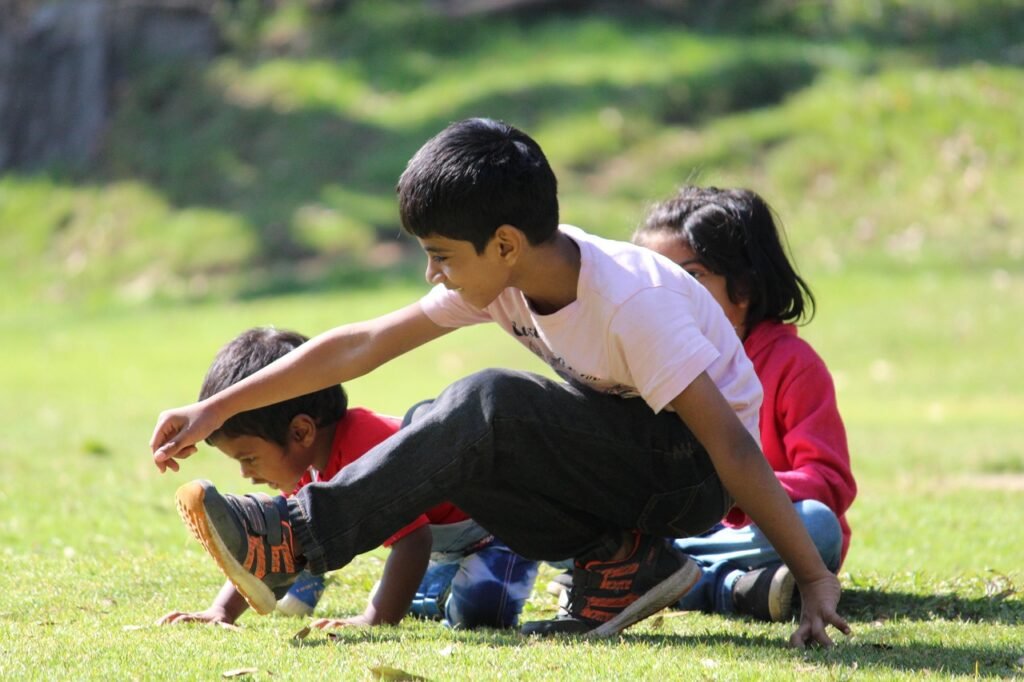
Childhood today looks very different from earlier generations. School schedules, screen time, academic pressure, and reduced outdoor play have become part of everyday life for many children. In this context, parents and educators are increasingly exploring activities that support both physical movement and emotional balance.
Kids yoga is one such practice — not as a discipline to perfect, but as a playful and mindful way for children to move, breathe, and relax.
What Is Kids Yoga?
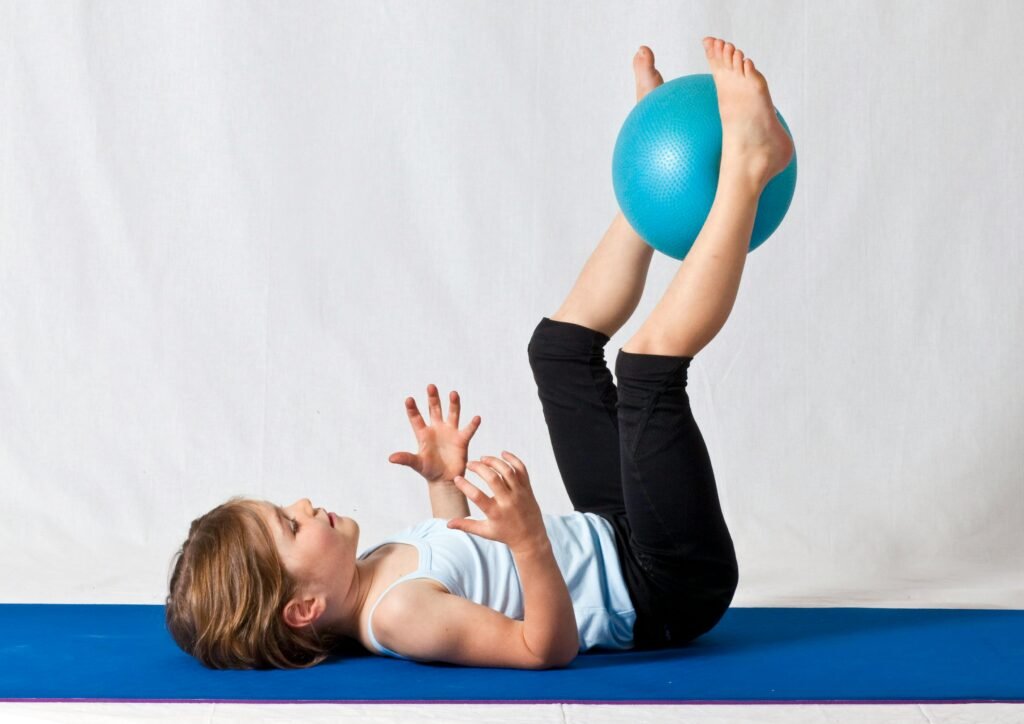
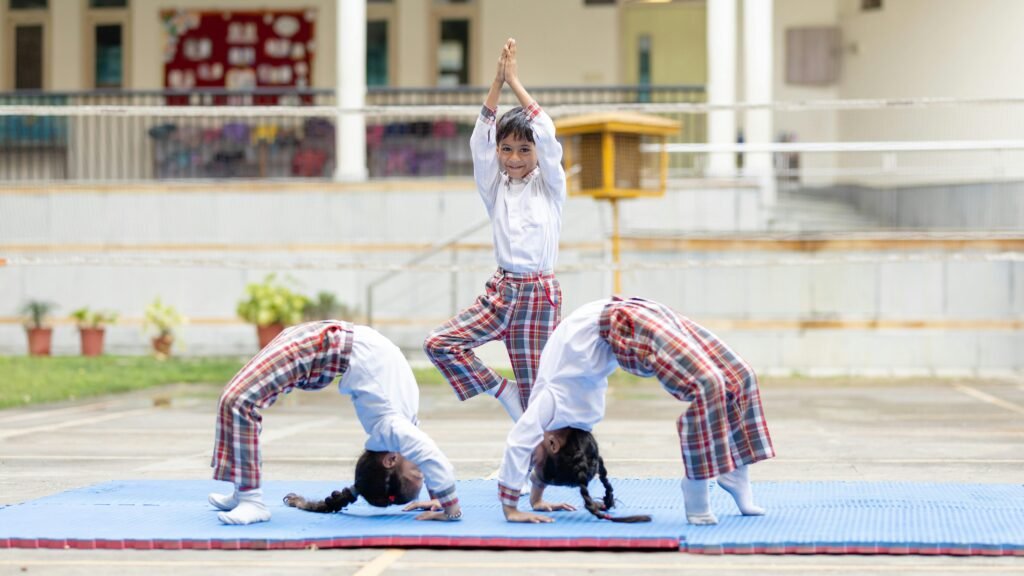
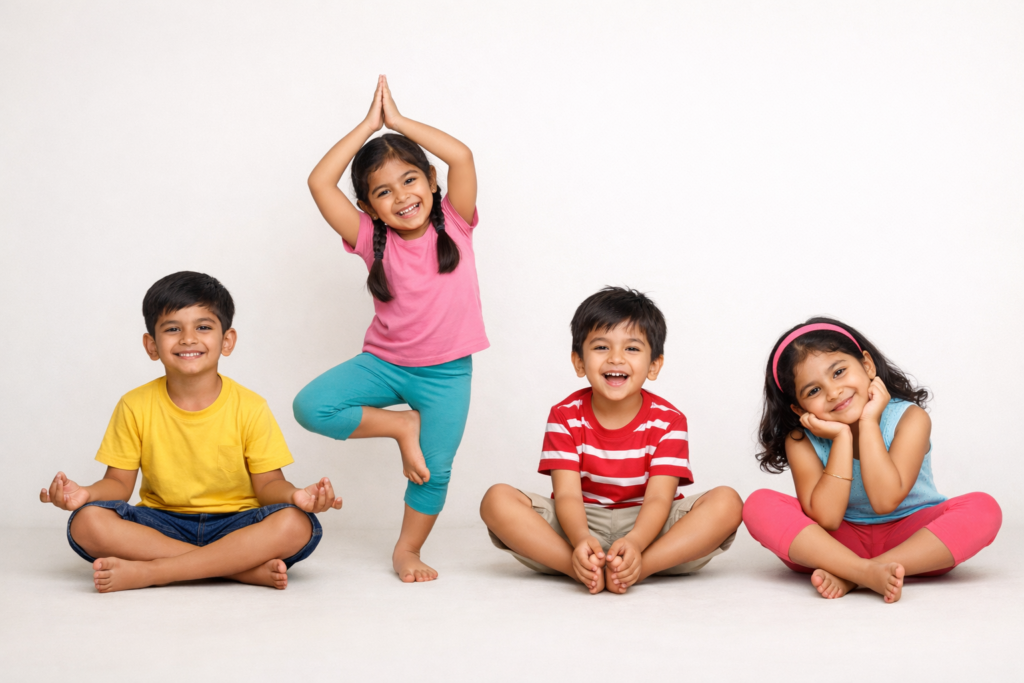
Kids yoga is an age-appropriate adaptation of yoga that focuses on:
Simple movements
Creative postures
Storytelling and imagination
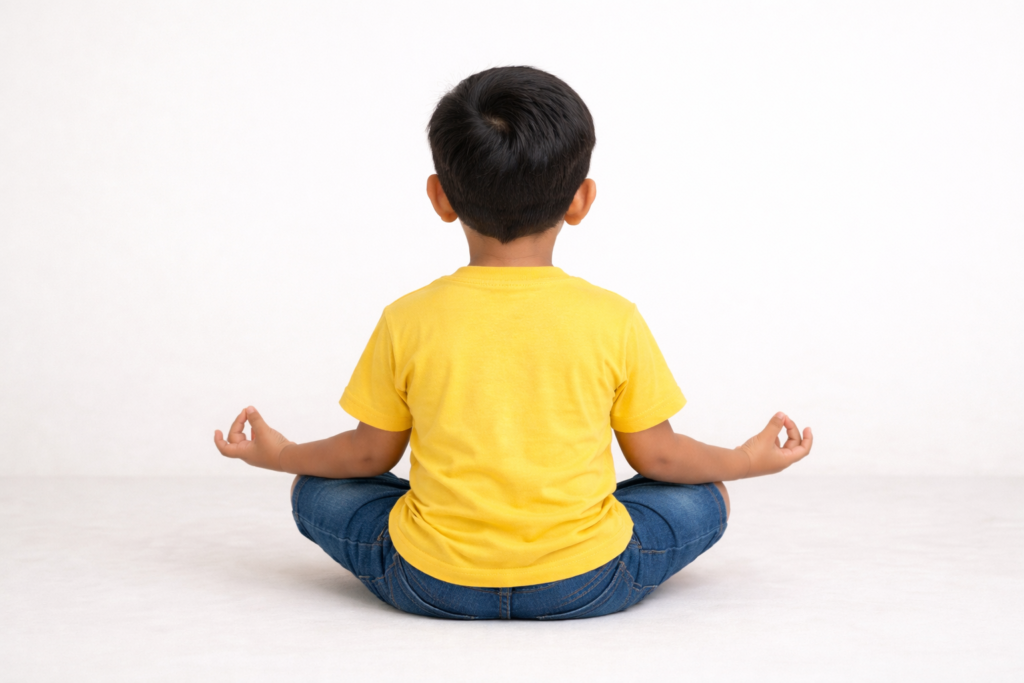
Breathing awareness
Relaxation through play
Unlike adult yoga, kids yoga is not about holding poses or achieving flexibility. It emphasizes enjoyment, curiosity, and body awareness.
How Kids Yoga Is Different from Adult Yoga
Kids yoga is designed around how children naturally learn and move.
Kids Yoga
Adult Yoga
Playful and imaginative
Structured and technique-focused
Short attention spans respected
Longer holds
Story-based movement
Pose-based sequences
Emphasis on fun
Emphasis on form
This makes kids yoga engaging rather than instructional.
Why Movement Matters for Children
Children benefit from regular movement that:
Encourages coordination
Supports posture and balance
Builds body awareness
Offers a healthy outlet for energy
Yoga-based movement provides variety and calm, complementing sports and free play.
Mindfulness and Emotional Awareness
Through simple breathing and relaxation exercises, kids yoga can help children:
Recognize emotions
Pause and reset
Develop calm responses
Improve focus gently
These practices are introduced in a non-forced, age-appropriate manner.
Each stage focuses on developmental readiness, not performance.
Safety and Guidance in Kids Yoga
A positive kids yoga experience depends on:
Trained instructors
Age-appropriate sequencing
Encouragement rather than correction
Respect for each child’s comfort level
Yoga for children should always feel safe, inclusive, and enjoyable.
Not every child will connect with yoga in the same way — and that’s perfectly okay.Some children enjoy – the movement, the stories, the calm moments; Others may simply enjoy trying something new. Kids yoga works best when children feel free to explore without expectations.
How Kids Yoga Fits into a Balanced Lifestyle
Kids yoga can complement:
Sports
Outdoor play
Creative activities
School routines
It offers a quiet counterbalance to busy days without replacing other forms of activity.
🌈 Final Thought
Kids yoga is not about shaping children into yogis. It’s about offering them tools — movement, breath, awareness — that they may carry forward in ways that suit them.
At FitBodyPath, kids yoga is approached as a supportive, playful, and mindful practice, respecting each child’s individuality and natural rhythm.
When introduced with care and creativity, kids yoga can be a gentle way to support movement, focus, and emotional awareness — all while keeping joy at the center of the experience.
Yoga is a simple, accessible, and powerful way to improve strength, flexibility, sleep, and mental clarity. Click here to know more >>